
Key Takeaways
- The most common semaglutide side effects are digestive, like nausea, and they are usually mild.
- Nausea tends to be worst just after a dose increase and eases as your body adjusts.
- Smaller meals, fewer greasy foods, ginger, and hydration are the go-to ways to manage it.
- Serious risks are rare, which is why semaglutide is prescribed and monitored by a physician.

If you are starting semaglutide for weight loss in Las Cruces, it is smart to know what your body might do in the first few weeks. The most common semaglutide side effects are digestive, they are usually mild, and they tend to fade as your body adjusts. At Fountain of Youth LC, Dr. Joanna Rachelson and Dr. Laura Leija-Urrea start every patient on a low dose and increase it slowly, which is the single best way to keep side effects manageable.
What are the most common semaglutide side effects?
The most common semaglutide side effects are gastrointestinal: nausea, and sometimes vomiting, diarrhea, constipation, or reflux. Research published on NIH PMC notes that nausea affects roughly half of patients early on, while about a quarter experience vomiting, and both tend to cluster during dose increases and ease over time.
- Nausea, the most common, usually mild and worst in the first days after a dose increase.
- Constipation or diarrhea as digestion slows down.
- Reflux, bloating, or burping after meals.
- Mild fatigue or headache while your body adjusts.
Because semaglutide slows how fast your stomach empties, most of these effects trace back to digestion. That is also why they are strongest right after a dose goes up and settle once you stabilize at a given dose.
How do you manage semaglutide nausea?
The best way to manage semaglutide nausea is to eat smaller meals, go easy on fried and greasy foods, and stay hydrated. Ginger and peppermint help many people, and a short walk after eating can settle the stomach. Most nausea eases within the first weeks as your dose stabilizes.
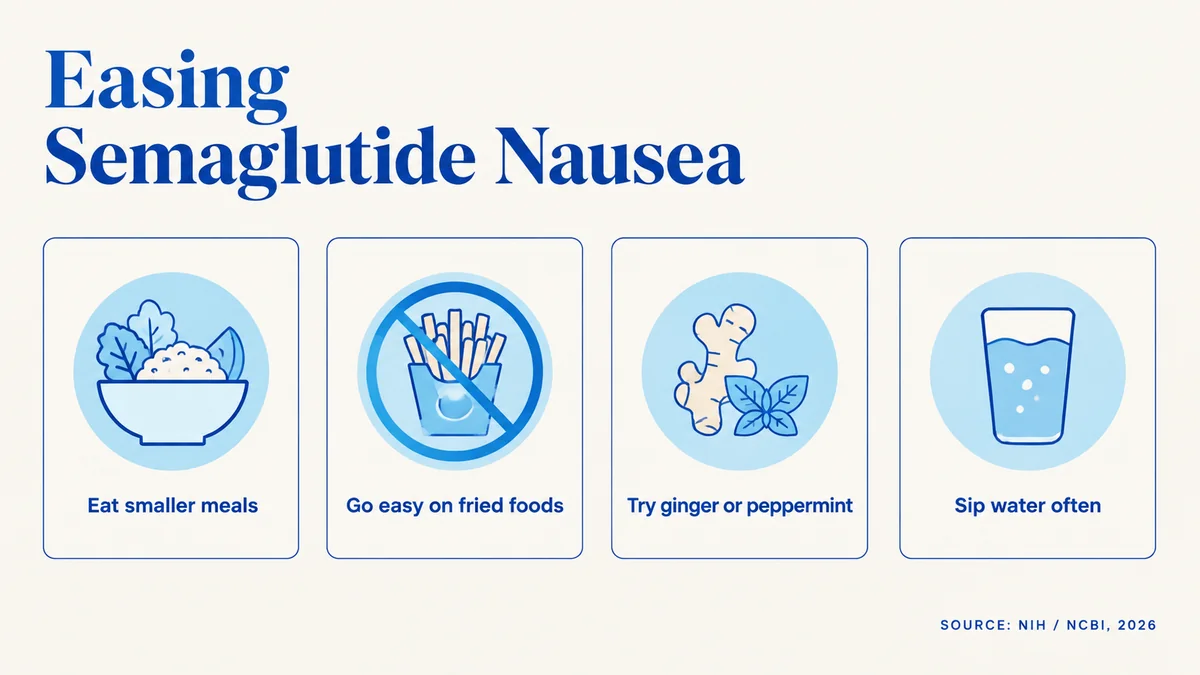
- Eat smaller, more frequent meals instead of a few large ones.
- Cut back on fried, greasy, and very sugary foods that sit heavy.
- Try ginger or peppermint tea, and sip water through the day.
- Take a short walk after eating rather than lying down.
If nausea is interfering with your day, tell your provider. Slowing a dose increase or holding at your current dose for longer often solves it, which is exactly why a physician-guided program matters.
What are the more serious risks to know?
Serious side effects are uncommon but worth knowing. Semaglutide is not appropriate for everyone, and rare risks include pancreatitis and gallbladder problems. In people with a personal or family history of medullary thyroid cancer or MEN2, it should be avoided entirely.
When to call your provider
Reach out promptly for severe or persistent vomiting, signs of dehydration, or severe abdominal pain that will not ease, since that can be a sign of pancreatitis. Seek care right away for any signs of an allergic reaction.
This is why semaglutide is a prescription medication taken under medical supervision, not something to order and self-manage. A proper evaluation screens for these risks before you ever start.
Will semaglutide change my face or cause loose skin?
This is really a weight-loss effect, not a direct drug side effect. When you lose weight quickly, you lose some volume in your face and can notice looser skin, which is sometimes nicknamed a hollow or gaunt look. It happens with any fast weight loss, not just with semaglutide.
You can soften it. Losing weight at a steady pace, eating enough protein, staying hydrated, and adding strength training all help preserve muscle, fullness, and skin tone. This is another reason a supervised program beats going it alone: we watch your pace and adjust so results look and feel healthy.
Do semaglutide side effects go away?
For most people, yes. Side effects are usually strongest in the first weeks and after each dose increase, then ease as the body adjusts. A slow, steady titration, the approach we use at Fountain of Youth, is designed to give your body time so results build without the side effects taking over.
New to GLP-1 programs? Start with our medical weight loss guide, see what to eat on semaglutide, or compare semaglutide vs tirzepatide.
Frequently asked questions
Does semaglutide nausea go away?
For most people, yes. Nausea is usually worst in the first days after starting or increasing a dose and eases as your body adjusts. Eating smaller meals and staying hydrated helps, and your provider can slow the dose if needed.
What foods should I avoid on semaglutide?
Fried, greasy, and very sugary foods tend to worsen nausea and bloating. Smaller portions of lean protein, vegetables, and whole foods are gentler while your stomach empties more slowly.
Is semaglutide safe?
Semaglutide is an FDA-approved prescription medication used under physician supervision. It is not appropriate for everyone, including people with a history of medullary thyroid cancer, so a medical evaluation comes first.
How long do semaglutide side effects last?
Most are mild and last from a few days to a couple of weeks, often flaring after a dose increase and then settling. Persistent or severe symptoms should be reported to your provider.
When should I call my doctor on semaglutide?
Call promptly for severe or lasting vomiting, signs of dehydration, or severe stomach pain, which can signal pancreatitis, and seek care for any allergic reaction.

Joanna Rachelson, MD
Dr. Joanna Rachelson is a licensed Family Medicine physician at Fountain of Youth LC in Las Cruces, NM, where she and Dr. Laura Leija-Urrea, MD, lead physician-supervised medical weight loss, hormone therapy, and IV wellness care. Meet the team.
Thinking about semaglutide in Las Cruces?
Book a consultation and our physicians will review your health, set a safe starting dose, and guide you through every step.
Disclaimer: This content is for informational purposes only and is not medical advice. Results vary by individual and are not guaranteed. Semaglutide is a prescription GLP-1 medication that requires a physician evaluation, is not appropriate for everyone, and can cause side effects. Before starting, changing, or stopping any medication, consult a licensed healthcare provider.